Tóm tắt (Nguyễn Ái Việt)
Sau chiến dịch Biên giới 1950, tương quan lực lượng giữa hai bên Việt và Pháp đã trở nên cân bằng hơn. Quân Pháp bắt buộc phải triệt thoái khỏi vùng biên giới Việt Trung lui về bảo vệ vùng đồng bằng sông Hồng. Cái giá phải trả mang một ý nghĩa chiến lược vô cùng to lớn, các lực lượng Việt Nam đã thông được đường tiếp tế hậu cần từ Trung Quốc.
Giai đoạn này bắt đầu bằng một số thành công của tướng De Latre de Tassigny, tướng Pháp giỏi nhất trong chiến tranh Việt Pháp. Cũng có thể trong các chiến tích của tướng De Latre có tinh thần lạc quan quá mức của phía Việt Nam sau chiến dịch Biên giới, cũng có thể có ảnh hưởng bởi phần thiếu kinh nghiệm thực tế của các cố vấn quân sự Trung Quốc. Tuy nhiên, việc tạo ra được một tuyến phòng thủ kiên cố và việc xây dựng được một quân đội người Việt dưới sự lãnh đạo của người Pháp, chứng tỏ nhãn quan chiến lược và am hiểu tình hình của tướng De Latre. Trong các cuộc công kiên vào các căn cứ ở đồng bằng sông Hồng như Vĩnh Phúc, Mạo Khê và sông Đáy, phía Việt Nam phải trả giá bằng thương vong nặng nề.
Tuy nhiên, sau khi tướng De Latre de Tassigny chết vì bệnh ung thư, người thay thế là tướng Raoul Salan đã tỏ ra không đủ năng lực và kinh nghiệm để có thể đối phó với các lực lượng Việt Nam đã trở nên mạnh mẽ bởi khí tài Trung Quốc, được đảm bảo hậu cần tương đối đầy đủ từ các vùng hậu phương Thanh-Nghệ và được tổ chức chính quy hơn. Hơn nữa, tướng Giáp đã nhanh chóng chuyển từ chiến thuật đánh công kiên vào các căn cứ phòng thủ, được hỗ trợ bởi không lực và pháo binh, sang chiến lược quấy rối, rồi rút nhanh vào rừng sâu.
Từ đầu năm 1952, quân Pháp đã không còn kiểm soát được đường quốc lộ 6, buộc phải rút khỏi Hòa Bình, co cụm về sau phòng tuyến do tướng De Latre đã xây dựng từ trước. Từ tháng 2 đến tháng 9/1952 là thời kỳ giằng co. Phía Việt Nam cũng không dám tấn công vào tuyến phòng thủ, phía quân Pháp cũng không dám rời khỏi tuyến phòng thủ. Tuy nhiên quân Việt Nam liên tục o ép, quấy rối, tập kích vào các đồn lẻ nhằm dụ quân Pháp ra khỏi tuyến phòng thủ. Hơn nữa, việc vùng tự do Thanh Nghệ được nối liền với vùng sông Đà, Lào và Việt Bắc, là một đe dọa tiềm tàng lớn đối với kết cục của chiến tranh. Do đó, việc tái chiếm Hòa Bình và Tây Bắc sẽ có ý nghĩa quyết định và là bắt buộc đối với quân Pháp.
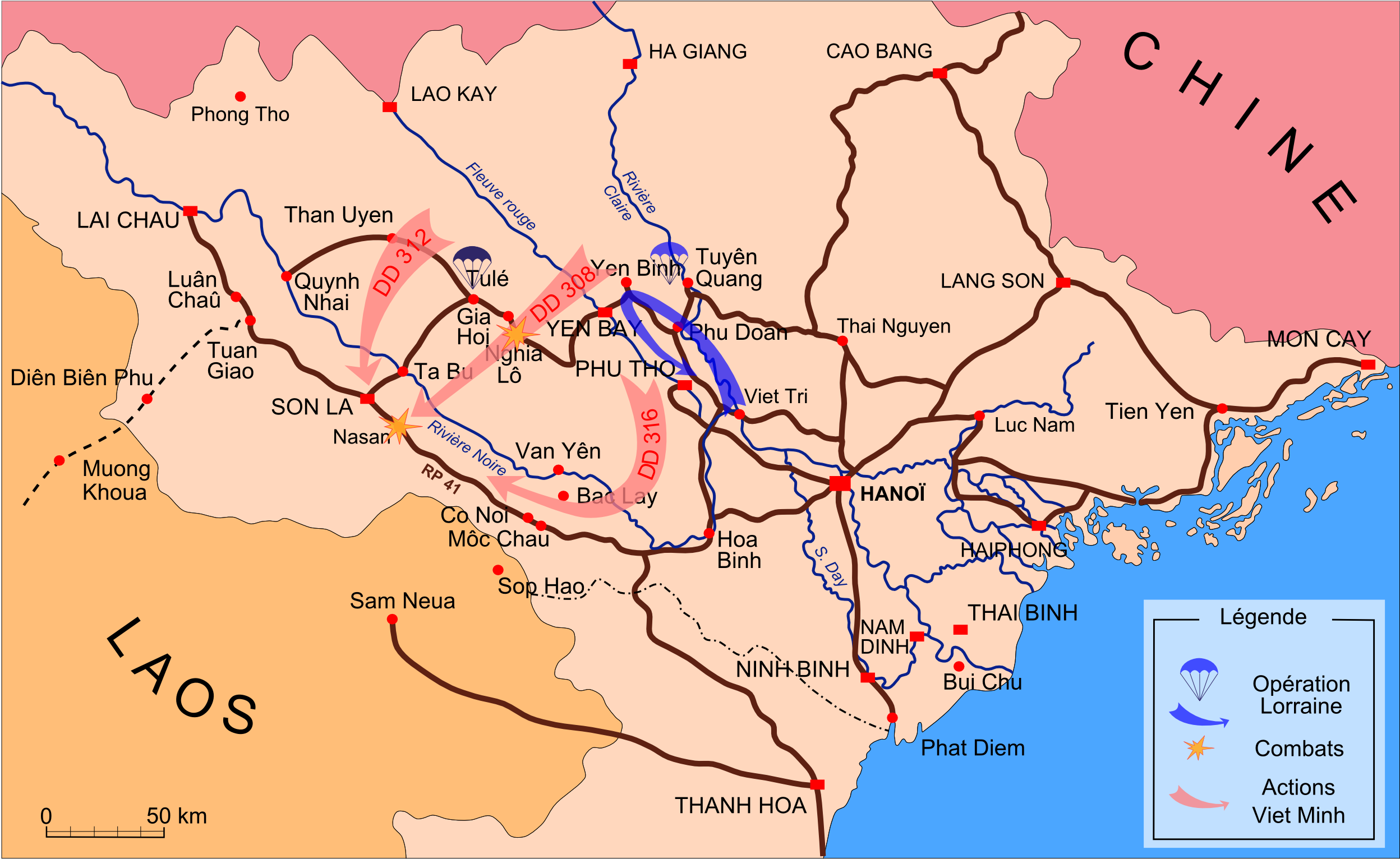
Từ cuối tháng 9/1952, Raoul Salan quyết định mở cuộc hành quân tảo thanh Lorrane, trước hết đánh vào các căn cứ của Việt Nam tại Phú Thọ, Đoan Hùng và Tuyên Quang nhằm tạo sức ép để buộc phía Việt Nam rời bỏ các căn cứ trong vùng người Thái ở vùng sông Đà, nếu muốn bảo vệ các căn cứ hậu cần tại Việt Bắc. Tuy nhiên, tướng Giáp đã chọn một đối sách đúng đắn, một mặt ông sử dụng hai trung đoàn để bảo vệ các căn cứ tại Thái Nguyên và Yên Bái, mặt khác không đem binh lực rời khỏi vùng sông Đà. Thất bại trong việc dụ quân Việt Nam rời khỏi vùng người Thái, ngày 17/11/1952, Raoul Salan buộc phải hủy bỏ cuộc hành quân để rút về sau phòng tuyến cuẩ De Latre de Tassigny. Ngày 19/11/1952, quân Việt Nam, bất ngờ hạ đồn Mộc Châu nằm trên đường số 6 và đường số 43, kiểm soát được cửa ngõ vào Tây Bắc và đường sang Thượng Lào. Với chiến thắng này, phía Việt Nam dường như nắm chắc toàn bộ vùng người Thái, nên đã huy động lực lượng cỡ Trung đoàn tấn công vào Nà Sản. Tại đây, quân Pháp lại có được một điểm sáng, khi đẩy lùi được quân Việt Nam và gây cho họ thương vong nặng nề. Với sự hỗ trợ của Mỹ, quân Pháp tỏ ra có ưu thế khi huy động hỏa lực và không quân để bảo vệ các lớp phòng ngự dày đặc như con nhím. Với Nà Sản, chiến dịch Thu Đông kết thúc giai đoạn 1.
Giữa giai đoạn 1 và giai đoạn 2 của chiến dịch Thu Đông, phía Việt Nam chủ động mở thêm mặt trận Tây Nguyên với 2 tiểu đoàn độc lập. Quân Pháp lại phải chia thêm quân để đối phó một cách bị động và dần đánh mất thế chủ động. Trong khi đó, phía Việt Nam vẫn tập trung được binh lực để chuẩn bị cho giai đoạn 2.
Giai đoạn 2 thường còn gọi là Chiến dịch Thượng Lào bắt đầu vào đầu tháng 4/1953, khi phía Việt Nam mở hai mũi tấn công đồng thời vào Luang Phrabang và Cánh đồng Chum với hy vọng sẽ chiếm được hai khu vực quan trọng này trước mùa mưa. Tuy nhiên, mũi tấn công Luang Phrabang với lực lượng lớn đã bị chặn đứng tại Mường Khoua với một lực lượng tương đối nhỏ bé gồm các binh sĩ người Lào được chỉ huy bởi sĩ quan Pháp. Do tương quan lực lượng chênh lệch, báo chí thế giới đã đưa tin Luang Phrabang sẽ thất thủ trong thời gian ngắn. Tướng Raoul Salan đề nghị vua Lào sơ tán khỏi Luang Phrabang, nhưng vua Lào không đồng ý, nhất quyết ở lại. Khi Mường Khoua thất thủ, các đội quân của tướng Giáp đã phải đối diện với mùa mưa và không thể chiếm được Luang Phrabang.
Tại mũi tiến công vào cánh đồng Chum, cả hai bên, đặc biệt phía Pháp huy động những lực lượng lớn hơn. Chiến sự ác liệt đã xảy ra tại Sầm Nưa là chốt chặn vào cánh đồng Chum của phía Pháp. Raoul Salan đã sai lầm khi cho triệt thoái quân Pháp ra khỏi Sầm Nưa và đưa cánh quân này vào thảm bại. Có thể bên Pháp đã bị ám ảnh bởi tâm lý bi quan. Chỉ có các lực lượng Thái và Mèo thiện chiến, tiến hành chiến tranh du kích, đã thành công trong việc cầm chân các lực lượng Việt Nam và Pathet Lào trước ngưỡng cửa vào cánh đồng Chum trước mùa mưa. Mùa mưa tới, phía Pháp đã giữ được cánh đồng Chum. Đánh giá về chiến dịch Thượng Lào, cho đến nay, cả hai phía đều còn có ý kiến trái ngược. Phía Pháp coi việc bảo vệ được Luang Phrabang và cánh đồng Chum là thắng lợi, mặc dù Mường Khoua và Sầm Nưa đều thất thủ. Trong khi đó phía Việt Nam lại đề cao chiến thắng tại Mường Khoua và Sầm Nưa, và giải thích không rõ ràng về thiệt hại lớn của mình, bất lực trước chiến thuật du kích của các lực lượng người thiểu số Mèo Thái theo Pháp, cũng như việc không thể chiếm được Luang Phrabang và cánh đồng Chum.
Giai đoạn 1951-1953 là giai đoạn đụng độ ở quy mô lớn với thế trận giằng co. Phía Việt Nam thường thất bại khi tấn công vào các cứ điểm phòng ngự lớn. Quân Pháp dần mất thế chủ động, đặc biệt không thể cơ động, nên đã phải chia sẻ lực lượng. Pháp có một số thành công trong việc xây dựng và sử dụng các lực lượng bản xứ giỏi chiến thuật du kích tại Nà Sản và Thượng Lào. Giai đoạn này có số thương vong cao cho cả hai bên, nên được gọi là Chiến tranh Xay thịt. Về phía Pháp, ý tưởng xây dựng một tập đoàn cứ điểm phòng ngự dày đặc tại Điện Biên Phủ ngày càng rõ nét. Chính Raoul Salan đã khuyên tướng Henrie Navarre, người thay thế mình thực hiện ý tưởng này, dẫn đến kết thúc cuộc chiến với thắng lợi cuối cùng của Việt Nam.
Yêu cầu bản dịch tiếng Việt có thể gửi cho tôi.
Vietnam Notebook: First Indochina War, Meat Grinder War (1951-1953)
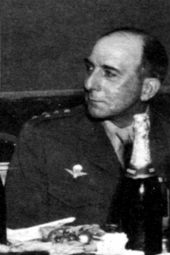
Image via Wikipedia
In December 1950 the French had abandoned their northern garrisons
along the Chinese border, they had been run out of Cao Bang and Lang Son
in panic and had retreated to the
Red River Delta. No place was safe though. The startled French soon found out that there were plenty of
Vietminh cadres inside the Delta working diligently to carry out
dau tranh, the Vietnamese version of
Mao’s theory of guerrilla warfare.
Operating clandestinely, mostly at night, they continued the harassment
campaign, antagonizing and sometimes terrorizing the French and
those Vietnamese who openly supported them. Ho Chi Minh and his men,
invigorated by their military performance in the fall, were eager to
continue the momentum. Maybe too eager.
That was the scene a week before Christmas in 1950. As the people of
the world made preparations for religious and family celebrations, the
situation far from home on the Asian mainland was bleak. General
Macarthur’s troops were scrambling for their lives in North Korea after
the Chinese surprise at the Yalu River. To the south, in the Red River
Delta region of North Vietnam, the French, soldiers and citizens alike,
were caught in a web of fear and intrigue, and many by then just wanted
to leave Tonkin as quickly as possible.
Into this atmosphere of seemingly irreversible spiritual
decomposition rode one Marshall Jean de Lattre de Tassigny, surely the
most distinguished French commander of the Vietnam War and ultimately
the most successful. He had a distinguished combat record in World War I
and World War II. He was wounded five times in World War I. He was an
officer of the Legion of Honor, entitled to wear the red white and blue
ribbon of Napoleon. De Lattre was a division commander in 1940 when the
French were defeated. Later he joined the
Free French. He was promoted and commanded the
French First Army
during its advance into Germany in ’44 and ‘45. When the Germans
attacked in the Battle of the Bulge de Lattre’s forces had just
liberated Metz.
De Lattre arrived in Saigon on the 17th of December 1950. He had
required some convincing. After all de Lattre was already a decorated
national war hero, why should he risk going out on a loss, especially
for what looked more and more like a lost cause? He was a good soldier,
he did his duty for France. As part of his
rider contract
he had succeeded in getting the French government to appoint him both
Commander-in-Chief and Governor General of the colony. Therefore he
exercised both political and military authority from his headquarters in
Saigon. He would be the only French commander to have that leverage.
De Lattre, called “Roi Jean” by many, breathed spirit back into the
French forces. He changed regimental routines and instilled a strict
military protocol. He immediately squelched all evacuation plans. Then,
as one of his first measures, de Lattre ordered the construction of a
line of concrete pill boxes, machine gun bunkers, circling the Delta. He
could put second-rate troops, certainly not paratroops or Foreign
Legionnaires, in these bunkers and still make it difficult for the
Vietminh to move in and out of the Delta. In addition, it was hoped that
the outposts might slow down any major Vietminh attack and provide
advance warning to permit the French to deploy their mobile forces in
defensive positions. This became known as the de Lattre Line.
De Lattre also ordered the formation of a
Vietnamese National Army
that would become known as the Bao Dai Army (due to its veiled
connection to the emperor for legitimization purposes). For the French
not much was expected of these troops, but they could be trusted enough
to assume garrison duties when the front-line French mobile forces moved
out to battle the Vietminh. The Vietnamese parachute battalions were
also part of the Bao Dai Army, yet the French commanded them and used
them as though they were part of the regular French forces. They
actually did earn a good fighting reputation over time. This so-called
Vietnamese National Army did free up some French troops, but the French
never exhibited much faith in them and so never gave them any real
responsibility, thus reinforcing hard feelings in the Vietnamese, who
knew they were always going to be treated as mere puppets by the French.
For more on the French force structure in Vietnam read
The French Armed Forces at War, 1945-1954.
At any rate, de Lattre did have a plan, but would he have time to carry it out?
Giap’s General Counteroffensive
January-June 1951:
13-17 January
23-28 March
29 May-18 June
In January 1951,
General Vo Nguyen Giap launched his “General Counteroffensive” designed to crush the reeling French army once and for all in the
Red River Delta.
The Red River Delta was where the highest concentration of ethnic
Vietnamese lived. Known as the Dragon’s Belly area, the region around
modern Hanoi is where the Vietnamese culture and way of life got started
thousands of years ago. It was the key strategic and symbolic
prize. The new emphasis would be on conventional battles. Giap had made a
fateful decision. He decided it was time to shift to phase three
revolutionary warfare.
Vinh Yen, 13-17 January:
At his jungle headquarters General Giap was laying plans for the
anticipated coup de grace, an all-out offensive on the Red River Delta
fortress using big army conventional tactics. Basically his plan was to
overwhelm the ailing French forces by attacking apparent weak spots in
their defenses with large infantry formations, similar to the human wave
attacks employed by the Chinese Communists in Korea.
Clearly this new way of fighting posed new logistical considerations
for Giap. His Vietminh divisions were heavily dependent on local
suppliers for rice, particularly rice from the Thanh Hoa area. These
areas, and access routes to and from, had to be kept in Vietminh hands,
yet Giap had to keep his divisions geographically separated so they
wouldn’t exhaust local food supplies. It was a delicate balancing act,
one that frequently required violence to maintain. His divisions were
spread out as follows: in the Viet Bac base area north of the Red River
Delta, from west to east, the 312th, 308th, 304th and 316th divisions.
The 320th Division was based south of the Delta near the coast (largely
responsible for holding Thanh Hoa). And last, the 42nd and 64th
Regiments were already inside the Delta busy conducting dau tranh
operations. The upshot: in order to concentrate his forces en masse
against a particular French stronghold, Giap would first have to move
large numbers of troops into place. This hampered his strategic mobility
and made surprise more difficult to achieve.
Nevertheless, General Giap was confident, and he was eager to
capitalize on his momentum. He launched the first attack against the
northwestern defenses of the Delta, against an isolated French outpost
at a place called Vinh Yen, in the area where the Red River joins the
Black River and the Clear River runs down from northern Tonkin. His plan
was to use the outpost as bait to draw in French mobile reserves and
destroy them. He committed two divisions, the 312th and the 308th to the
attack, having moved them undetected in to position.
In a feat that foreshadowed his greatest logistical triumph years
later at Dien Bien Phu, Giap achieved both strategic and tactical
surprise at Vinh Yen. He had marched two divisions many miles, and yet
the French didn’t know when, or where, the Vietminh were going to
attack. The French units at the point of attack had no warning when Giap
ordered a regiment to storm Vinh Yen. Just as he had surmised, the
French predictably sent a mobile group charging down the road to the
rescue. With their arrival an entire Vietminh division came out of the
jungle. De Lattre then sent in another mobile group. Another Vietminh
division appeared. Suddenly the Vietminh had two mobile groups pinned
down and surrounded. The Vietminh attacked in mass formations in
daylight. Several human waves came out of the jungle to charge the dug
in French positions. It was a virtual shooting gallery for the French
defenders. There was a haze of blood, barbed wire and machine gun fire,
the French soldiers valiantly hanging on. In an act of pure bravado, de
Lattre flew into the position by light aircraft to reassure the officers
and steady the troops. It worked.
With Giap’s troops out in the open and vulnerable, the French
commander upped the ante. He called in all available air forces to step
up the carnage. From out of the skies came the death machines, guns
blazing, carrying napalm, the feared jellied gasoline that burns
everything it touches. Dropped in big aluminum tanks from low-flying
fighter-bombers and refurbished
Junkers 52s
it would spread as it burned, a rolling wave of fire. The French pilots
flew low over the Vietminh and rolled the drums out the cargo doors.
The results were devastating for the Vietminh, their casualties
horrendous. The battle went on for four days, with both sides suffering
significant losses, finally the Vietminh melted back into the jungle.
The French were left in control of the smoking valley. Giap was
smarting, but he was not to be deterred, he would regroup and attack
again, but he would never again expose his infantry to French air power
in the open in daylight.
Mao Khe, 23-28 March:
According to
Bernard Fall:
“Undeterred by his unsuccessful attack against Vinh-Yen, Giap shifted
the 308th, 312th and 316th Infantry Divisions in the direction of Mao
Khe. The attack began in the night of March 23 to 24, 1951. By March
26th, the whole first line of posts had fallen into Communist hands, but
the deep bay of the Da Bach River permitted the intervention of three
French destroyers and two landing ships whose concentrated fire broke up
the enemy’s attempt at penetrating into Mao Khe itself” – Street
Without Joy. Pg 41-43
Giap and his intelligence staff had determined that the 316th
Division could break into the Delta from the northeast through the town
of Mao Khe. The goal was to capture the road between Hanoi and Haiphong,
cutting the French off from resupply by sea. Giap again did the
logistical heavy-lifting, bringing in reserves of ammunition and food,
much of it moved without the benefit of automobiles. He also redeployed
elements of the 351st Heavy Division toward Mao Khe. Once again Vietminh
troops moved into attack positions before the French had any idea they
were there. Giap gained both strategic and tactical surprise. This time
elements of the 316th Vietminh division jumped off at night and
immediately overran and bypassed several French strong points. Soon they
were fighting their way into the town of Mao Khe. All was not lost for
the defenders though, a Moroccan armored car unit continued to fight on
despite seeing all their armored cars knocked out. Nearby a small Tho
tribal unit held on to its isolated position in a church behind Vietminh
lines.
Unlike at Vinh Yen air power was not particularly effective at Mao
Khe. The Vietminh had learned to stay under cover and to stay very close
to the French once in combat, a tactic called “hugging the enemy.” But
what the Vietminh had not considered was the intervention of naval
forces. The French were able to bring in a parachute battalion by
landing craft, reinforcing the Moroccans at a crucial moment. In
addition they brought destroyers up the tidal estuary and trained their
heavy guns on Vietminh positions. From there they wreaked havoc on
Giap’s forces. The resistance of the garrison, the reinforcements
brought in by sea, and the naval gunfire, convinced Giap to retreat once
more.
Day River, 29 May-18 June:
The Vietminh commander was forced once again to pull back and lick
his wounds. But Giap was resolute, he was determined to maintain the
offensive. But where next? He decided to hit a perceived weak spot at a
location in the southeastern region of the Delta, along the Day River.
It would be a coordinated operation with the 320th division attacking
across the Day River to link up with the 42nd and 64th Regiments.
The 320th struck on the 29th of May. The wet monsoon had begun, and
Giap and his staff assumed that the foul weather would hamper the
French. The 316th and the two regiments inside the Delta also attacked
simultaneously to divert French attention. At first the offensive looked
promising with Vietminh troops making impressive initial gains. But
logistically the Vietminh had a big problem, their shortage of artillery
was even more pronounced than in the two previous attacks. Adding to
their woes, the terrain was open and the monsoon rains made it difficult
for them to move supplies, even by human porters and bicycle.
Conversely, French air power and armor controlled the open spaces and
French
dinassauts
dominated the Day River. The French went on to teach Giap another
lesson. Once again the Vietminh had to break off their offensive. Once
again they suffered heavy casualties. Thousands more of Giap’s troops
were killed and wounded. Among the French causalities was Bernard de
Lattre, the only son of General Jean de Lattre. Ironically, as Bernard
Fall noted, the Vietminh were defeated in almost exactly the same place
that the Chinese defeated the Trung Sisters over a thousand years
before.
Interestingly, the Day River attack fell in the area of the largest
Catholic population and greatest Catholic strength in Vietnam. The
Catholics had shown luke warm support for the French, but they tried in
vain to avoid the fight against the Vietminh. In fact, the French
believed that the Catholics had advance warning of the Vietminh attack
in the Day River area and chose to keep it quiet from them. Whatever the
case may be, the general’s young son, Lieutenant Bernard de Lattre, was
in command of an exposed outpost in the battle. Tragically he was
killed early in the attack. His grieving father never forgave the
Catholics, he blamed them for the loss of his son for the rest of his
life.
The defeats suffered during the General Counteroffensive represented a
serious setback for Ho and Giap. The Vietminh leadership had
underestimated the power of French napalm and naval guns. Lesson
learned, they would never expose large troop formations to them again.
But these men were determined. They would fight on for another two
decades. According to Bernard Fall: “All the battles had been less-than
conclusive victories for the French, but had given the Viet Minh an
ample opportunity to measure their own limitations and to find out the
major weaknesses of the French.
Vo Nguyen Giap was never again to forget the lessons for which his troops had paid so dearly.” – Street Without Joy. Pg. 47
De Lattre’s Response: Hoa Binh, The Meat Grinder Battle:
Giap had gone to Phase Three prematurely and was soundly defeated.
How would de Lattre respond? Now it was the Viets who were on the
defensive. The tables had seemingly turned in de Lattre’s favor, but the
price had been personally very high– he had lost a cherished son in the
process. Having paid such a price the grand old general was determined
to finish what he had started and win. His answer was Operation LOTUS.
LOTUS would be a lightning thrust from within the Red River Delta
with superior forces attacking outward. It would be aimed at one of
three possible targets: 1) an attack north into the Bac Viet; 2) an
attack south along the coast into the Than Hoa region; 3) an attack west
toward Hoa Binh.
De Lattre apparently rejected out of hand the notion of going for the
Vietminh supply lines to China (option 1). That was basically a repeat
of Operation Lea a few years earlier. He also rejected Than Hoa as an
objective (option 2) even though Than Hoa was a major communist
priority. A French victory there would have dealt the Vietminh a
significant blow. The loss of Than Hoa would have cut off the principal
Vietminh rice supply and likely would have caused major logistical and
psychological anxieties for Ho Chi Minh’s legions. In retrospect the
general’s decision to do battle elsewhere may have been a bad tactical
call.
Tonkin, November 1951:
Instead de Lattre turned his attention to Hoa Binh. Located in the
mountains west of the Delta, Hoa Binh was the mecca of the Muong people.
Controlling it had important political and psychological value for a
tribal people who had allied themselves with the French against the
Vietnamese communists. The Muong were the descendents of lowland
Vietnamese who took to the hills to get away from Chinese taxation in
the eighth and ninth centuries. By virtue of their isolation they
retained an ancient dialect of the Vietnamese language and as such were
considered barbarians by the Viets. Suffice it to say, the two peoples
did not get along, usually to the detriment of the Muong. The French
courted the Muong as part of their divide and conquer strategy, the two
had become solid allies, so maintaining them in their own capital was a
method to solidify those ties.
Another feature that made Hoa Binh an attractive target for de
Lattre’s crucial offensive was that it lay astride the Vietminh supply
line between Than Hoa and Giap’s base areas in the Bac Viet. Seizing Hoa
Binh would cut the rebels off from rice and other vital supplies. The
French also believed that they could expand their defensive perimeter to
include the greater Hoa Binh region to protect its pro-French, tribal,
population.
One more important influence on de Lattre should be noted. He, like
most of his colleagues in the French command, believed strongly in the
concept of the set-piece battle. This desperate search for the elusive
engagement whereby the enemy would be drawn out in the open and
destroyed in one great, and famous, battle had become an obsession with
the French Command in Indochina. Marshal de Lattre was a true believer
and may have felt that the conditions were right at Hoa Binh to provoke
such a scenario– the Hoa Binh area presented favorable terrain where he
could combine infantry, air, and riverine forces in battle, he had the
support of the local Muong tribes in the area, and most importantly he
could threaten Giap’s vital resource (rice). De Lattre believed he could
force Giap to expose his troops to save it. Giap had other ideas.
Looking back, the decision to go west to Hoa Binh instead of
attacking south into Than Hoa was arguably the single decisive error
made by the French commander. It would be extremely difficult for the
French to win the war without the active support of a good portion of
the native Vietnamese. Recall that, unfortunately for the French, the
Muong and Vietnamese were bitter foes. For those Vietnamese fighting and
dying for French interests it must have been a bitter pill to swallow
when they learned that the French strategy was driven by alliance with
the Muong! In 1951 there were about two hundred thousand Muong in Tonkin
as opposed to nearly twenty million Vietnamese, the French could
ill-afford to alienate the Vietnamese inhabitants in favor of the Muong.
But that is precisely what happened. Clearly, General de Lattre’s
myopic view of local politics and history contributed to the curious
decision to fight at Hoa Binh.
Operation LOTUS kicked off on the 13th of November, 1951, in the
midst of the dry monsoon season. The offensive commenced with a three
battalion parachute drop on Hoa Binh. Immediate results were
encouraging, tactical surprise was achieved and the the rice supply line
was suddenly severed. Back in the Delta a major ground force—fifteen
infantry battalions, seven artillery battalions and two armored groups
supported by combat engineers—fired up and drove toward Hoa Binh along
RC 6. Twenty dinassauts—riverine task forces—started up the Black River.
Three days later, on the 16th, the French forces linked up at Hoa Binh.
The Vietminh quietly faded into the jungle.
The Battle of Hoa Binh:
The French had thrown the first punch, now Giap had to take it. He
quickly repositioned his forces– he ordered the 316th and 320th
Divisions to the Delta to harass French forces and supply lines, he sent
the 308th Division to surround Hoa Binh, and he ordered the 304th
Division to interdict RC 6. Then the Vietminh rerouted their rice supply
line to the southwest, bypassing Hoa Binh. The flow of rice to the
Giap’s troops resumed.
On December 9th, 1950, the Vietminh launched their first ambush
against a garrison on the Black River at a place called Tu Vu. The
see-saw battle featured human wave attacks and numerous ambushes by the
Vietminh. According to Fall “the attack on Tu Vu was a portent of things
to come in its intensity and brutality.” The French were ultimately
forced to retreat from the Tu Vu garrison in early January, giving the
Vietminh an entire riverbank from which to launch ambushes on river
convoys. The cost had been high though; more than 400 Vietminh soldiers
lay dead on the field.
Giap was honing a new style of tactics designed to painstakingly
grind down French posts covering the approaches to the river and town.
Ambushes along RC 6 soon followed. It wasn’t long before the French had
committed significant forces to garrisoning hilltops and security
positions along RC6 and the Black River. The cycle of response and
counter-response escalated… to the ultimate benefit of the Vietminh.
Like a creeping vine they deployed multiple regiments around Hoa Binh
along with 120 millimeter mortars to support their frequent attacks.
They carefully surveyed the French positions well in advance, and the
recoilless rifles and mortars were precisely targeted on key machine gun
bunkers and command posts. The Moroccans, Algerians, and Legionnaires
who defended the forts fought magnificently, but in the end the
positions were usually overrun. A few survivors might fight their way
back though the Vietminh into the jungle. If they were lucky, they were
rescued by a relief force the next morning. many were not.
The campaign became known as “the meat grinder battle,” “the hell of
Hoa Binh,” and “the Hell on Road No. 6″. On January 12th 1952, two
vicious and effective Vietminh ambushes turned back a Black River convoy
and cut RC 6. Hoa Binh was now entirely dependent on supply by air.
Author Bernard Fall describes the scene:
“Probably the bloodiest river battles since the American Civil War
were fought between the French and the Vietminh around Notre Dame Rock,
with ships being attacked and sunk by gun fire, mines, and even frogmen.
On January 12th, the Vietminh ambushed one whole river convoy south of
Notre Dame Rock. Most of the ships were severely damaged and forced to
turn back. The first jaw of the pincers around Hoa Binh had closed. The
French no longer attempted to push through river convoys to Hoa Binh.
The stage was now set for the battle of Road No. 6.” – Fall. Street Without Joy
Meanwhile, on land, one by one the enemy had overrun enough of the
garrisons that Vietminh forces soon commanded the heights around, and
approaches to, the town. More importantly they had the local airfield
clearly in their cross-hairs. Increasingly accurate Vietminh gunners
made life miserable for supply pilots and the French began losing
valuable aircraft and personnel. The lot of the besieged French forces
in Hoa Binh looked dim, they were outnumbered and out gunned. Bernard
Fall:
“Against this meager force, the Communists threw the whole 304th
Division and Regiment 88 of the 308th Division, all now fully
re-equipped with brand-new Red Chinese equipment and equally new
American equipment captured by the Chinese Reds in Korea and transferred
by them to the Indochinese theater. The tactics used by Giap against
the forts along Road No. 6 were monotonously identical to those used by
him in 1950 against the French border positions, and in December 1951
against the Black River Line. On January 8th, 1952, the whole 88th
Vietminh Infantry Regiment attacked the vital hill position of Xom Pheo,
defended by the 2nd Battalion of the French Legion’s crack 13th
Half-Brigade.” — Bernard Fall, Street Without Joy
The ensuing battle at Xom Pheo was hard-fought and particularly
terrifying. Much of the fighting took place at night in darkness. The
sudden flashes of the sappers’ bombs, the screeching horror of incoming
mortars and recoilless rifle fire, mixed with the sound of bugles and
the blood curdling yells of onrushing infantry, all of this made for a
truly shocking experience for everyone involved. The French defenders
were badly mauled but refused to fall. Vietminh losses topped 700 dead,
their bodies scattered about Xom Pheo’s perimeter in the morning. The
assault failed to take Xom Pheo but the Vietminh 304th Division was
gaining firm control of the approaches to Hoa Binh along RC 6 anyway.
The next day they occupied more strategic high ground, ambushing and
nearly destroying a French Mobile Group that tried to pass below. The
second pincer around Hoa Binh was closed.
An attempt was eventually launched to break through to Hoa Binh. It
was a task force under Colonel Gilles comprised of three infantry
battalions and one artillery battalion. The rescue force, in spite of
considerable reinforcements along the way, made painfully slow headway
against ever-increasing enemy resistance along Road No. 6. I again cite
Bernard Fall as the authority on these matters:
“It took Gilles task force from January 18 to January 29– eleven full
days! — to cover the twenty-five miles between the Day River and Hoa
Binh, and each mile had been dearly paid for in French lives. It had now
become apparent that far from drawing the enemy into a “meat grinder”
operation, the French had been compelled to draw nearly one-third of all
their mobile forces available in the Red River Delta into an area where
those forces became unable to contribute to the mopping-up of enemy
guerrillas now infiltrating the vital Red River plain on an increasingly
massive scale. While Marshal de Lattre was dying in Paris from cancer
in January 1952, the decision was made in Indochina by his successor,
General Salan, to evacuate the whole Hoa Binh salient, thus making
available vitally needed troops for the forthcoming battle in the delta
and in the T’ai highlands.” — Bernard Fall, Street Without Joy
It was time to call it quits in Hoa Binh. But the architect of the
battle was not around to see it through. Marshal de Lattre had developed
prostrate cancer. He had been evacuated to France. The famous general
died a short time later, his legacy in Vietnam mixed. One wonders what
it would have been had he chosen to go after Than Hoa instead of Hoa
Binh? For the revered old general it no longer mattered.
De Lattre was replaced by
General Raoul Salan,
an old Indochina hand who knew the lay of the political and military
landscape as well as any French senior commander. Salan was a Saint
Cyrien who had fought in World War I and had commanded two infantry
divisions in world War II. He had held senior command positions in
Tonkin going back to 1945. He was known as
Le Chinois or
Le Mandarin, the Chinaman. American correspondent Howard Simpson met Salan while covering the war, he described him this way:
“He was an unimpressive, gray-haired man with a slight paunch, the
mark of a long-serving officer of the Colonial Infantry. There was a
sad, distant quality to his eyes. It was also said that his long service
in the Chinese border region and Laos had introduced him the soft
pleasures of opium and that his own collection of opium pipes was not
purely for show. ” — Howard Simpson, Tiger in the Barbed Wire
Salan quickly ordered disengagement from Hoa Binh. Easier said than
done. Yet the French had learned a few things over the years, for
instance they didn’t blow up the ammunition dump to announce their
departure! The evacuation plan was given the code name of “Operation
Amaranth” and involved a three leap withdrawal along RC 6. It was a
sophisticated plan, dependent on a massive naval convoy temporarily
re-opening the Black River combined with a major troop thrust to briefly
clear RC 6.
On February 22, 1952, the French began their tactical withdrawal from
the Hoa Binh salient. Impressively, they pulled it off. They caught the
enemy by surprise and made it out nearly unscathed. By the end of
February they were back inside the Red River Delta, behind the de Lattre
line. They even managed to evacuate most of the Muong soldiers and
civilians from Hoa Binh. As it turned out it was a textbook operation,
but it was a retreat.
Winter-Spring Campaign, October 1952 – May 1953:
With the French debacle at Hoa Binh the pendulum had swung back in
the Communists’ favor. The French were back on the defensive. Once again
the Vietminh went over to the attack. And even though his tactics had
worked beautifully at Hoa Binh Giap was made painfully aware of the
solid ties between the French and the mountain tribes in the northwest,
ties that threatened the Vietminh rear areas and possibly their ability
to be supplied by Mao’s China. His fortunes would be greatly enhanced if
those alliances could be interdicted. It was time to nail down loose
ends, and to capitalize on recent French misfortunes, but how best to do
it? Another direct assault on the Delta was still too risky. Better to
try provoking the French into coming out from behind their siege
defenses back of the de Lattre Line.
Giap was anxious to repeat the successful tactics learned at Hoa
Binh. In his winter-spring campaign he hoped to draw the French into
battle by attacking something they would have to defend, in a place
where they were not strong. That place was Laos.
Part of the Giap’s attraction to Laos was political. The French had
created the French Union of Indochina, consisting of the nominally
independent nations of Vietnam, Cambodia, and Laos. Unlike the
Vietnamese, the Laotians, ruled by King Sisavang Vong, had amicable
relations with their French masters. Therefore much of the fleeting
French legitimacy in Indochina was based on the viability of the
pro-French Laotian government. That meant that Laos had to be protected
militarily. Giap of course knew this. By attacking French-controlled
Laos, Giap sought several military outcomes: further isolate the Red
River Delta by bringing the highlands of western Tonkin under Vietminh
control, force the French to deplete their troops and fight far away
from their bases in the Delta, and demonstrate to the hill tribe
soldiers fighting alongside their French masters that they were on the
losing side. His operational objectives were the Royal Capital of Luang
Prabang and the Plaine des Jarres. His political objective was to deal
an embarrassing blow to the French and drive a wedge between the
component parts of the so-called Union of Indochina.
In addition, Ho Chi Minh and his ruling cadre, including General
Giap, realized that the Laotian border region would be a crucial
battleground in the years to come, so they wanted to force the tribal
elders there to think long and hard about alliances with the French.
This life and death rivalry for the affections of the T’ai hill tribes
was an important feature of the war. Events a year later at the epic
battle of Dien Bien Phu would show that the Vietminh had made their
point, the scare campaign against the T’ai bore fruit.
As the southwest monsoon came to an end in 1952, Giap started moving
his troops into battle order. He ordered the 148th Regiment, the 312th
Division, the 308th Division, and the 316th Division out of the Bac Viet
and into jump-off positions north of the Red River. Both the 308th and
316th Divisions left elements behind to guard their base areas. In
addition, the entire 320th Division remained in place to protect the
Than Hoa region and its life-giving stocks of rice.
The 1952-53 campaign would proceed in two phases. Why two phases?
basically for logistical reasons. The Vietminh couldn’t stockpile and
move enough supplies—especially rice and arms—to support a continuous
advance all the way from their base areas in the Bac Viet to Luang
Prabang and the Plaine des Jarres. The first phase was to carry the
Vietminh to the Black River and establish bridgeheads on the southern
bank. Then, after a pause of several weeks to bring up more supplies,
the second phase would begin, aimed at Luang Prabang and the Plaine des
Jarres.
Winter-Spring Campaign
First Phase: The Battle for the T’ai Hill Country Begins, October 1952:
Bernard Fall: “The Vietminh, having seen the possibilities and
limitations of French heavy equipment during the battles around the Red
River Delta, now had decided on the final course which was to bring it
eventual victory– an attack across the top of the Indochinese peninsula.
The French would find it almost impossible to use heavy equipment;
their Air Force would be fighting at maximum range against troops hidden
under a thick canopy of trees; and the Vietminh could make fullest use
of its inherent quality of fast cross-country movement, rapid
concentration from dispersed points of departure, and hit-and-run
ambushing of troops unfamiliar with jungle fighting. As early as October
1952 the Communist High Command had decided upon a military strategy
from which no French initiative and no amount of American military aid
were going to cause it to deviate until the end of the war.” — Bernard
Fall, Street Without Joy
The battle for the T’ai Hill Country kicked off off on October 11,
1952. Giap’s regiments crossed the Red River without opposition and
advanced rapidly to the southwest. The area into which the Vietminh were
advancing was under the control of pro-French partisans, principally
the T’ai. T’ai partisans had seized the region and held it for the
French in 1947 at the same time as operation LEA, but the French had
done little to exploit the hill tribes’ anti-Vietnamese tendencies. In
October of 1952, all the French had in the area were a handful of
indifferently armed light battalions of T’ai supported by a few regular
French battalions. The French didn’t wake up to the potential of an
anti-communist guerrilla movement in the highlands until it was too
late.
Giap’s forces were on the march. The better part of three Divisions–
the 308th, 312th, 316th– had successfully forded the Red River and were
advancing headlong southward across a 40-mile front. Each division had
close to 10,000 men. Bernard Fall: “The French line of posts immediately
to the west of the Red River still remained as weak and tenuous as ever
and the city of Nghia Lo, though somewhat better fortified and now
defended by about 700 men, still was no match for a determined Commuinst
attack led by a 10,000 man division equipped with recolless cannon and
120mm heavy mortars.
“In less than six days after the first crossing of the Red River, the
308th Division had swept ahead of itself all the small French outposts
and had appeared across 40 miles of jungle in front of Nghia Lo. Once
more Communist camouflage had been perfect. The first inkling the French
had that they were about to be attacked was when, on October 17 at
1700, an intense mortar barrage fell with extreme accuracy and ferocity
on Nghia Lo Hill, smashing the barbed wire, ploughing passages through
the mine fields, and knocking out French gun crews. At 1730, the dreaded
cry of “Tien-len!” was heard and Vietminh infantry appeared on top of
the battered defenses.
“In less than one hour, all of Nghia Lo Hill had fallen into enemy
hands. The French main anchor in the T’ai hills had been lost inside of
twenty-four hours and now it was obvious that all the French posts to
the north and west of Nghia Lo would be crushed without hope if the
Vietminh were to reach the Black River before the garrisons were able to
complete their withdrawal” — Bernard Fall, Street Without Joy
On October 17, to give their forces in the path of the Vietminh
advance a chance to escape, the French dropped a parachute battalion,
the newly formed 6ème Bataillon de Parachutistes (6th Colonial Parachute
Battalion, 6 BCP for short), to block Tu Le Pass, the one navigable
path through the mountain range between the Red and Black Rivers. 6 BCP
was commanded by Major Marcel Bigeard. They fought a bloody but
successful rear-guard action and held the Tu Le Pass long enough for
French forces to get away. Then they themselves had to fight their way
through. They suffered extremely high casualties in doing so. In one
action, a rear-guard battle and escape from hilltop post of Muong Chen,
80 T’ai irregulars led by 4 of Bigeard’s men fought off a Vietminh
attack but were forced to flee. They were tracked and harassed by
Vietminh guerrillas and helped by sympathetic T’ai tribesman during the
strenuous ordeal. Those who survived finally emerged from the jungle
several weeks later after a harrowing journey through dense jungle.
According to Fall there were 16 of the original 84 left alive and they
were ” barely shadows staggering along.” Bigeard had lost 3/5 of his
battalion, but worse, he had been forced to abandon some of his wounded
on the battlefield, many were taken prisoner never to be heard from
again.
Operation Lorraine:
By and large the Vietminh had reached their phase one objective by
mid-November. They had swept out of their base areas in northern Bac
Viet and had quickly moved into position. They had reached the Black
River and crossed it in places. In doing so they had overrun French hill
posts at Nghia Lo and Muong Chen and they had hunted Bigeard’s 6 BCP
almost to extinction.
By then Vietminh objectives must have been clear to General Salan,
but he had no significant forces between the Vietminh and their
objectives in the western highlands and Laos. He would have to divert
them some other way. But how? Taking a page from Scipio Africanus’
playback from the Carthage campaign, Salan ordered a major drive up the
Red River into Giap’s own back yard. Bernard Fall picks up the scene:
“In view of the rapidly deteriorating situation, the French High
Command decided to gamble once more upon a deep stab into the enemy’s
communication and supply system along the Red River, in a hope that this
would lead the enemy commander (Giap) to withdraw a large part of his
assault divisions in the northwest to the defense of his own rear
areas.” — Bernard Fall, Street Without Joy
The result was Operation LORRAINE. It was a massive assault
consisting of 30,ooo men. According to Bernard Fall it was the biggest
single operation in the French phase of the war. Salan’s primary
objective for LORRAINE was to force Giap to reinforce his base areas and
protect his supply lines thus drawing off troops needed for the battles
in the highlands and the drive for Laos. This presumably would buy time
for the French to move defensive forces into place in the highlands and
Laos. And of course, he hoped he might be able to lure Giap into a
set-piece battle under favorable conditions by threatening his vital
rear bases.
As mentioned, this was a massive operation. The French forces
committed to Operation LORRAINE included four Mobile Groups, an Airborne
Group with three parachute battalions, two independent infantry
battalions, two battalion-sized armored sub-groups, two tank destroyer
squadrons, two armored reconnaissance squadrons, two artillery
battalions, three battalions of combat engineers and two Dinassaut.
The plan was bold but it was tactically complex. Two armored task
forces were to cross the Black River by pontoon bridge just below its
confluence with the Red River, secure the area to the immediate south
and west, then cross back over the Red River and drive north to capture
communist supply dumps at Ngoc Thap. After securing this first objective
the task force would then drive twenty-five miles north up the western
bank of the Clear River to a place called Phu Doan. They would wait
there to be reinforced by three battalions of paratroops dropped in and
ferried across by a riverine force bringing heavy equipment and
additional reinforcements. The French units executed the plan perfectly
and everything went well.
The initial river crossing of the Black River occurred on October 29,
1952. By 4 November (Eisenhower’s election day in the U.S.) the French
had secured their left flank and established three bridgeheads on the
north bank of the Red River. By November 7th they had secured a good
swath of the area between the Red and Clear Rivers. On the 8th, an
armored task force drove north to Phu Doan, fighting its way past a
Vietminh rear guard in the Chan Muong gorge. The airborne drop and
rendezvous with the riverine force took place exactly on schedule. On
the 13th, after consolidating their position, the French sent their
armored spearheads another thirty miles northwest along the western bank
of the Chay River, a tributary of the Clear paralleling the Red to the
southwest, reaching a point well north of Yen Bay.
The assault force had thundered its way north with relative ease. But
what of it? So far it had not forced Giap to alter a thing. From all
appearances he was paying little heed to this threat. He knew they were
there of course, but he maintained his poker face and gambled they would
outstretch their own ability to supply themselves. Bernard Fall:
“On the Communist side, the problem was fairly simple. Since the
approximate strength of the French thrust was well known, as well as its
direction, the Communist High Command had to take a calculated risk in
estimating that the French thrust would run out of steam before it could
reach the really important supply centers at Yen Bay and Thai Nguyen.
General Giap decided, therefore, to proceed with his offensive into the
T’ai country, but amputated one regiment from each of two of his
divisions to cover his rear.
“On the French side, the very size and heaviness of the units
involved in the offensive made the restoration of roads and bridges an
overriding condition of movement and slowed down the whole operation to a
crawl.”– Bernard Fall, Street Without Joy
So Giap didn’t fall for the French maneuver. The wily old veteran had
covered his bases. By doing so he had increased his own odds for
success. He had left the 36th Regiment of the 308th Division behind
shadow the French force and the 176th Regiment of the 316th Division to
protect the main supply dumps further north. After a skirmish with the
French forces at the Chan Muong gorge, the 36th broke off contact and
faded into the jungle; the 176th held its position. By November 13,
Salan faced a tough decision. His assault force had lumbered quite far
north to a point only fifteen miles from the main Communist supply
dumps. They were close, but they were separated from those dumps by a
low ridgeline defended by the 176th Regiment.
LORRAINE had come this far– now, facing a fresh Vietminh regiment
standing between his forces and pay dirt, and another enemy regiment
harassing his lines in the rear, Salan had to pull the trigger. His
primary objective lay forward, but by going for it his window for
retreat might close altogether. Salan got cold feet. He would not risk
the loss of another task force, it would be too devastating to French
morale both in country and back in Paris. So, accordingly, on November
14, Salan ordered his forces to withdraw after penetrating hundreds of
miles into Vietminh territory.
We will never know what may have happened had Salan decided to drive
on to his objective and try to seize the bases around Yen Bay? What we
do know is that the retreat was no picnic for the LORRAINE task force.
On the return journey, the 36th Regiment caught them in a bloody ambush
in the Chan Muong gorge. The French fought their way through but they
suffered significant casualties (approximately 300 men), they were lucky
to get as many men out alive as they did.
Within days of the decision to retreat, Operation LORRAINE was
through. The French were back to their starting place and the Vietminh
offensive into T’ai country had not faltered. The French had captured
and destroyed significant quantities of communist supplies, but had left
the main dumps untouched. They had suffered about 1,000 casualties in
the process. More important, they failed in their primary purpose.
In sum, both operations LOTUS and LORRAINE ended in failure for the
French. The mythical allure of the set-piece battle, the idea that they
could somehow maneuver the enemy’s hard-core regular divisions into a
situation where they could be destroyed in one great battle, had been
dashed on the rocks of Hoa Binh and the Chan Muong Gorge. Yet, even
after the costly setbacks suffered by de Lattre and Salan, the desperate
obsession with the ultimate set-piece battle continued until the end of
the war. In fact, the most famous set-piece failure of the war was yet
to happen– it would take place at Dien Bien Phu– and it would carry the
name of the Salan’s successor, Henri Navarre (The Navarre Plan).
Giap had already made the mistake of exposing his troops in set-piece
battle, in 1951, against de Lattre at Vinh Yen. Unlike his French
adversaries he was not going to repeat it.
One interesting side note: on November 9th as a tank company from
Mobile Group 1 pushed north toward Phu Hien, they made a curious
discovery. They found the first Russian-made Molotova truck plus a cache
of Russian weapons. This was proof that the Soviets had joined the war
on Ho Chi Minh’s side. By war’s end there would be many hundreds of
these trucks making vital contributions to Vietminh logistics, and
Russian anti-aircraft guns and 120mm mortars would be ubiquitous, but on
that fall day, the men of Mobile Group 1 had uncovered the first few
pieces of evidence. Little did they know they were looking at the
future.
Na San Hedgehog, November 23 – December 2, 1952:
There was a brief pause in the advance while the Vietminh brought up
supplies and reinforcements. Then the Vietminh launched a series of
attacks against a French airhead—an isolated outpost with an airstrip
for re-supply and reinforcement—at Na San. Between November 23rd and
December 2nd, 1952, Giap launched regimental-sized attacks against the
Na San “hedgehog.” They were thrown back with heavy losses. The French
were helped by poor Vietminh intelligence. The local tribes, mostly
T’ai, were hostile to the Vietminh, most either fled or provided no
information. It so happened that the Vietminh badly underestimated the
size of the garrison and strength of the forces protecting the position.
Na San was important to Giap because it lay astride one of the
primary northeast-southwest trails the Vietminh used to move supplies.
Giap’s logisticians needed unhindered access to the trail if they were
to fully support the 316th Division’s drive south to the Plaine des
Jarres. By holding Na San one controlled the trail, that simple. The
French had organized the strong-point and rapidly fortified it with four
infantry battalions, one artillery group, and engineering forces
airlifted in around the clock. They did all of this in less than four
days.
Correspondent Howard Simpson flew into the tiny outpost during the assault, his description is quoted here at length:
“In late 1952 Salan had established an air-supplied strong point in
the valley of Na San to protect Laos and the T’ai region. He had also
seen the mountain-ringed valley as the ideal rendezvous point for French
units forced to abandon their border outposts. By fortifying Na San
with its usable airstrip– fifty minutes flying time from Hanoi– he had
hoped to tempt Giap into a trap where his frontal assaults would be
smashed by French aircraft and artillery (set-piece battle again). Salan
had chosen the tough, one-eyed parachute officer Jean Gilles, then a
colonel, to command at Na San.
“The Vietminh 308th “Iron” and 312th Divisions attacked the defenses
on November 30th. A strongpoint to the northeast of the airstrip held by
T’ai irregulars cadred by Moroccans was overrun by Vietminh infantry
led by sappers with bangalore torpedoes. A heavy mortar barrage
supported the assault. The next morning at dawn a counterattack (with
fixed bayonets) by the 3rd Colonial Parachute Battalion retook the
position. The Vietminh attacked again. These were pyrotechnic affairs
with heavy casualties on both sides. On the morning of December 2, a
strident bugle call heralded the Vietminh withdrawal. Over 500 enemy
dead had been found in and around the French defensive wire. In Hanoi,
the satisfaction over the “victory” at Na San had obscured the fact that
the small garrison at the nearby post of Dien Bien Phu had been
evacuated under Vietminh pressure.
“The Vietminh may have “broken their teeth” on the defenses of Na
San, for which Colonel Gilles had been promoted to the rank of Brigadier
General, but the veteran campaigner had remained unimpressed. For him,
the troubling fact that the enemy had taken one of his fortified hill
positions in a night attack and held it for twelve hours under artillery
fire and napalm attack had called for a reassessment of the value of
air-supplied strongholds.
“The commander of Na San had not been alone in drawing pertinent
conclusions from the battle. General Giap had also learned some valuable
lessons. Later, in one of his orders of the day, he would state that Na
San had taught him that a fortified camp supplied by air could not be
taken without bringing the landing strip under “heavy artillery fire.”–
Howard Simpson, Dien Bien Phu
Simpson provides an atmospheric description of his time at Na San:
“the days I spent at Na San were a mix of impressions: the incongruous
sound of a German marching song rising along a mountain trail as a
Legion para battalion returned from a reconnaissance on Son La; the
Chinese-style padded jackets that made the already swollen Vietminh
corpses look like Michelin men; the little-lost-boy look on the face of a
French casualty with a fatal chest wound as they loaded him aboard a
Medevac C-47; the pungent, acidy aura of nuoc mam, the fish
sauce staple used by all Vietnamese troops; and the deathly silence of
the surrounding landscape in contrast to the bustle and clatter of the
French strongpoint.” — Howard Simpson, Tiger In The Barbed Wire
First Phase Assessed– Who won?
The results of the first phase clearly favored the Vietminh. The
French had lost control of almost the entire area between the Red and
Black Rivers. The T’ai still fielded significant partisan forces, but
the French had let them down badly. The French had also incurred
significant losses in the 6th BCP’s defense of Tu Le Pass and in
Operation LORRAINE. The one bright spot for the French was the
successful defense of the Na San airhead. They had demonstrated that
they could fly in troops and supporting arms faster than the Vietminh
could reinforce their attack columns. In this they were helped by the
increased scale of American support. For the first time, they were
receiving significant numbers of C-47 transport aircraft, far superior
to the antiquated Junker 52s on which they had been dependent.
Between the first and second phases of the Winter/Spring campaign,
the Vietminh sprang another ominous surprise on the French; they fielded
two independent regiments, the 84th and 95th, in the Central Highlands
of southern Annam below the 17th parallel, and attacked Pleiku, Kontum
and Dak To. The French held, but now they had another front to defend.
And now they had to face the reality that the Vietminh could field and
support two entire infantry regiments over a thousand miles from their
primary base areas in the Bac Viet. The French had a serious new problem
to deal with. The unfolding pattern of operations was clearly
developing in favor of the Vietminh. They were the aggressors while the
French were operating in an entirely reactive manner. The Vietminh were
successful in keeping their attacking forces concentrated. The French
were forced to disperse their maneuver forces to defend a multitude of
fixed objectives.
1952-1953 Winter/Spring Campaign
Second Phase:
on the 1st of April, 1953, as dry monsoon season closed out for
another year, General Giap, after building-up his supplies, commenced
his Spring Campaign (Second Phase) by launching dual spearheads on Luang
Prabang and the Plaine des Jarres. To get there his troops would have
to advance through some of the most incredibly difficult terrain on
earth. Once again, the former schoolteacher showed an amazing knack for
logistical planning and execution, he chose the optimum routes and
carefully stockpiled supplies forward along their route of march.
But in war, things don’t usually go as planned. In an act of bravado
that must have struck the French as craziness, the Laotian King Sisavang
Vong refused French recommendations that he leave Luang Prabang. In
itself that was not so strange, kings have stood and fought for their
crowns for centuries, but this king was persuaded to stay behind by a
blind Buddhist bonze. Laotians are generally ranked among the least
martial people on the face of the earth but the mysterious monk had
convinced the King’s to stay, he had assured him that the Vietminh would
not take the capital, he had seen it in a vision. That settled it, the
King was a good Buddhist and stayed. This put the French in a difficult
position, they clearly wanted the friendly King out of harm’s way, after
all he was their strongest ally among the Indochinese states, but he
was also the leader of his country and the French did not want to be
seen as imperial masters usurping sovereignty. They had little choice,
so, against their better judgment, the French flew in an extra parachute
battalion and prepared to defend the city. They also dropped a company
from a native Laotian Parachute Battalion along the Vietminh route of
advance. It was promptly destroyed.
Bernard Fall: “When the Vietminh invaded Laos early in 1953, the
French High Command was faced with two choices: evacuate the whole
country until sufficient forces were available for its re-conquest or
try to hold on to a series of strong points throughout the country which
would hold off the bulk of enemy force until such time as the capitals
of the country, Luang Prabang and Vientiane, were in shape for a
prolonged defense. Since the King of Laos had refused to budge from his
royal residence in Luang Prabang, the political necessity for holding on
to Laos prevailed over the military factors, which would have dictated
total evacuation of at least the northern half of the country.
“Dozens of outposts throughout northern Laos were given the
assignment to stay put and fight as long as they could in order to delay
the advance of several Vietminh divisions now marching into the
kingdom. Some of the posts had no choice; they were isolated in roadless
territory and, in the middle of the rainy season, inaccessable to
aircraft or trucks. Others were given specific missions to hold out for a
minimum number of days in order to give the French Command in Laos time
to construct a second line of defense. One of the key posts given such
an assignment was Muong Khoua.
Situated at the point of confluence of the Nam Pak and Nam Ou rivers,
Muong Khoua was an ideal site to delay the enemy advance for a short
while. Together with it satellite outpost of Sop Nao, defended by a
reinforced platoon under Lieutenant Grezy, Muong Khoua was given the
task of holding out at all costs on April 3, 1953.” — Bernard Fall, Street Without Joy
Muong Khoua:
The Vietminh force heading for Luang Prabang had been making solid
progress since jumping off. It seemed that they would be on the
outskirts of the Laotian capital in no time. Then, improbably, they
encountered a tenaciously defended outpost at Muong Khoua north of Dien
Bien Phu. A company of Chasseurs Laotiens, Laotian Light Infantry, led
by a French captain and three sergeants put up a heroic fight. Knowing
the outpost was manned by only a few soldiers, mostly Laotians, the
Vietminh most likely anticipated little difficulty in overrunning the
outpost. After all, the garrison only had a few light machine guns and a
couple of 60mm mortars.
Once again, things did not go as planned for Giap’s advancing
columns. Against all odds, the feisty bunch of defenders at Muong Khoua
repelled an attack by an entire Vietminh regiment! The Communists were
temporarily stunned. They lost some of their momentum. Giap was pressed
for time, so he rerouted most of the troops through the jungle,
bypassing the garrison. But he had lost precious time in the process. A
smaller force was left behind to lay siege to the Muong Khoua outpost.
Improbably, Muong Khoua’s small gang of defenders held out for over a
month, supported at night by flare-dropping C-47s. It was an epic and at
times eerie battle — an amazing pyrotechnic show in the jungle covered
mountains. Finally, in the confusion, the French captain gave orders to
break out. In the dead of night he and his exhausted, ragged, men fired
off their last mortar rounds and slipped through the Vietminh lines.
Only two of the Frenchmen and two Laotian soldiers finally made it
through the jungles of Southeast Asia, through 80 kilometers of
enemy-held territory, on May 22, 1953. When they emerged from the jungle
at Phong Saly they were said to have looked like “christ off the
cross.” Muong Khoua was to become a symbol of heroism in Indochina for
the French. Its lightly armed garrison had held off a heavily armed
force for over a month.
The Vietminh advance did reach the outskirts of Luang Prabang, but
they were several days behind schedule. It made the difference. Muong
Khoua had delayed Giap’s advance just enough for the French to fortify
the city. The French also had time to lay a successful ambush. On May 6,
1953, they attacked. The Vietminh flinched. The next day the skies
opened-up and monsoon rains poured down with a vengeance. Giap could go
no further. Luang Prabang was saved. The blind bonze’s prophecy had come
true.
Sam Neua:
Meanwhile events played out less well for the French further east as
they tried to slow down Giap’s other spearhead that was marching south.
The French had occupied a potential airhead on the Laotian/Vietnamese
border at the town of
Sam Neua
which lay at a critical point along the best route of advance toward
the Plaine des Jarres. On the heels of the heroic actions at Na San the
French may have felt that they were on a roll and that their fortunes
would continue.
In late December, in response to events during the first phase,
French commander Salan had garrisoned Sam Neua with the 1ére Bataillon
des Parachutistes Laotiens, the 1st Laotian Parachute Battalion, backed
by a company of French airborne engineers sent in to improve the
runway. Then in early April, as Giap’s offensive was firing back up for
phase two, Salan sent in reinforcements to Sam Neua, one additional
battalion. He had anticipated Giap’s logistics and had correctly
determined that the Vietminh spearhead aimed at the Plaine des Jarres
would follow the path adjacent to the outpost.
So what happened?… why did events play out differently for the French
at Sam Neua than at Na San? Because Salan inexplicably ordered Sam Neua
abandoned. Why? French sources are fairly mute on this subject, but it
was possibly due to a lack of confidence in the ability of airpower
against forces camouflaged by the jungle canopy, after all the runway
was towered over by sheer karst ridges that were well within 75mm
recoilless rifle and 82mm mortar range and too far away for the garrison
to march out and hold them. If the place were to be held, the French
perimeter would have to be huge, and they were drastically short of
troops to carry that off. That turned out to be a bad call, especially
for the poor souls who were defending the field.
Things quickly turned ugly. The details are sketchy, but it appears
that Salan ordered evacuation of the best troops by air first, which
hardly helped the morale of those left behind. Then, on the 12th of
April, just as the Muong Khoua garrison was beating back the first
Vietminh attack, the remaining 1,700 French troops evacuated Sam Neua,
on foot, speeding down the road toward the Plaine des Jarres with the
Vietminh hot on their heels. The evacuation turned into a route. Two
days later, thirty miles out of Sam Neua and fifty miles from the Plaine
des Jarres, the leading elements of the 316th Division caught up with
the French. A quarter of the French force, mostly T’ai and Lao
irregulars, vanished into the jungle and the rest took heavy casualties.
A renewed attack the next day broke the force; fifteen of the
twenty-two French officers were killed or captured. Only 220 men made it
to the Plaine des Jarres. Sam Neua was a disaster for the French. But
by the time that Vietminh forces finally did close in on the target a
major French camp had grown up there. To make matters worse for Giap,
from the skies came the deluge of the wet monsoon. The Vietminh had to
pull back again.
Through all of this the French were assisted faithfully by hill-tribe
partisans. T’ai or Meo (aka Hmong) were extremely effective guerrillas
and proved time and again to be a thorn in the side of the Vietminh.
They were highly effective at raids and ambushes in the incredibly
rugged areas in which they lived. They understood the terrain and knew
the local geography better than the Vietminh. And, the local populace
was by-and-large hostile to the Vietminh, thus serving as fertile ground
for intelligence. But Giap’s Winter/Spring Offensive had succeeded
somewhat in taking some of the shine off the French military for many.
To the French, using tribal guerrillas to defend against the Vietminh in
the Tonkin/Laotian border region became an increasingly acceptable
option, but many of the guerrillas themselves were becoming somewhat
gun-shy in the face of the Vietminh advances. If the Vietminh came back
to attack Luang Prabang, for example, the French clung to the belief
that they could establish a base on the border, protected by tribesman,
from which to launch partisan attacks in the surrounding area against
the Vietminh. Salan, in fact, proposed the seizure of Dien Bien Phu
shortly before he handed over command to his successor Navarre.
By this time the Americans had joined the French cause in Indochina
wholeheartedly. At first, in 1945-47, the U.S. looked at it as a French
colonial brush fire war. If anything, our attention was focused on
events to the north as Mao’s Communists were running Chiang Kai-shek’s
Koumintang army out of China. Everything changed abruptly on June 25,
1950 when the North Korean People’s Liberation Army attacked south over
the 38th parallel and drove all the way to Pusan. Suddenly, the U.S.
was faced with fighting its first limited war. Blustery speeches
notwithstanding, nuclear was not an option. Korea was a major turning
point in our national defense policy. It was also a major turning point
ideologically. We no longer looked on the war in Indochina as a nasty
little French colonial war against nationalist rebels. It had become
part of a common struggle against monolithic Communism. At that point,
the U.S. began throwing big money and equipment at the French effort.
To end, 1951-52 had been a bad stretch for the French in Indochina.
Yes, they had some successes to hang their hats on– Na San, the failure
of Giap’s Laotian campaign, but when they looked up at the end of the
day they had clearly lost significant ground to Ho Chi Minh’s people’s
war. In order to turn things around, if at all possible by this late
date, the French needed a truly bold readjustment of strategy.
Unfortunately for them that type of thinking was not forthcoming.
Instead, French military and political policies remained tied to a
course that so far had come up empty. After de Lattre they suffered from
the bad combination of mediocre leadership mixed with blind hubris.
They never seemed to learn from experience, unlike their enemies, and
they continued to think inside the box, a box that continued to shrink
around them. True to form they appointed a new Commander-in-Chief,
General Henri Navarre who promptly submitted the Navarre plan, which was
more of the same bad medicine for the French. For their part, Giap and
his staff began planning for the next Winter-Spring campaigning season.
The Vietminh would be poised to strike at the end of the southwest
monsoon in October- November 1953. The two sides were once again on a
collision course, the stage was set for the decisive confrontation. This
time the French chose the field, a tiny crossroads village not far from
Muong Khoua called Dien Bien Phu.
Sources:
Bernard Fall,
Street Without Joy
Howard Simpson,
Dien Bien Phu
Howard Simpson,
Tiger In The Barbed Wire